



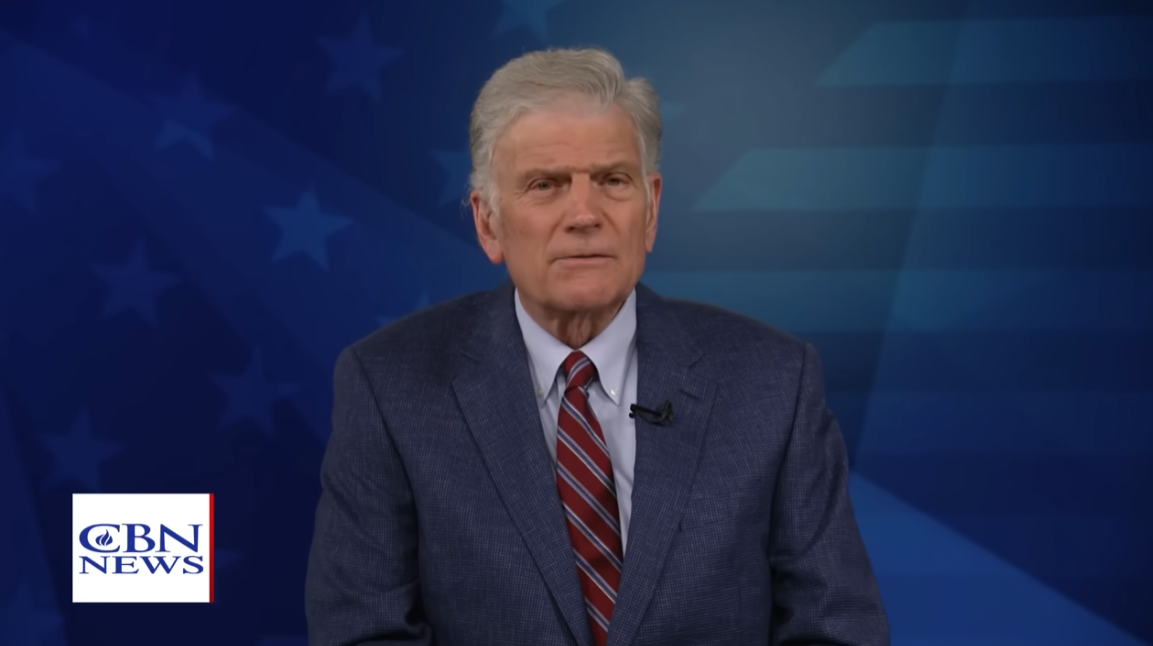
An Interview with Franklin Graham
Five Things We Will Learn
- Why America’s current crisis demands national and personal repentance, not political solutions alone.
- How prayer functions as a front-line spiritual response in times of global instability and moral confusion.
- Why believers are commanded to pray for leaders regardless of personal agreement or political alignment.
- How to discern prophetic times without fear or complacency, while remaining grounded in Scripture.
- Why prayer, repentance, and readiness are essential disciplines as the world moves closer to Christ’s return.
A Burden That Could Not Be Ignored
America—and much of the world—stands in a season of extraordinary upheaval. According to Franklin Graham, the call to prayer did not emerge from planning or strategy, but from spiritual burden.
That burden was ignited by a late-night message from Jack Hibbs, simply urging that something must be done. Graham says the urgency immediately resonated with him. Our nation, he believes, has drifted far from God’s truth—marked by moral confusion, social unrest, and instability at the highest levels of leadership.
He points to debates before the Supreme Court as a revealing example. When foundational truths such as the definition of a woman are argued without clarity, Graham does not see progress—he sees confusion. For him, these moments reflect a deeper spiritual disorder that cannot be solved by courts or policies alone.
A World That Feels Like It Is Imploding
That sense of instability extends far beyond America’s borders. Graham points to unrest and persecution across the globe—from Iran to Gaza, from Venezuela and Cuba to Russia and Ukraine. Violence, repression, and uncertainty appear to be intensifying rather than subsiding.
Yet Graham does not respond with panic or political outrage. Instead, he calls believers back to prayer—beginning with repentance.
This repentance, he stresses, must be both national and personal. It is not enough to confess the sins of a country while ignoring our own. Humility before God, a turning away from sin, and a surrendered heart are essential if prayer is to be offered rightly. Only then, he says, can believers stand before God asking for mercy, wisdom, and intervention.
Praying for Leaders in Times of Pressure
A central emphasis of Graham’s message is the biblical mandate to pray for those in authority. He names specific leaders, including Donald J. Trump, Vice President JD Vance, and members of the president’s cabinet—leaders carrying decisions that affect millions of lives.
Graham is clear: prayer is not conditional on agreement.
Whether someone supported a leader politically is irrelevant. Leadership decisions shape the direction of a nation, and the pressure facing those in authority today is immense. Scripture calls believers to intercede for them, asking God to grant wisdom, restraint, and guidance.
He extends this call to law enforcement and public servants as well—those tasked with maintaining order amid rising anger and volatility. For Graham, prayer is not a passive act, but an act of responsibility.
Living Ready in Prophetic Times
When the conversation turns to prophecy and the end times, Graham offers a sober, Scripture-centered perspective. Many believers sense that we are living in the “last days,” though no one knows how long that season may last.
Rather than encouraging speculation, Graham emphasizes readiness.
He points to Jesus’ parable of the ten virgins—five wise and five unprepared—as a warning to the Church. Knowing the Bridegroom is coming is not enough. Readiness requires repentance, holiness, and faithfulness. Believers must keep their spiritual houses in order, living with watchfulness rather than distraction.
At the same time, readiness does not mean withdrawal. Graham stresses the continued urgency of proclaiming the gospel—declaring that Jesus Christ bore our sins, died on the cross, was buried, and was raised on the third day. While time remains, the Church must remain active, faithful, and obedient.
Revival Talk, Youth Awakening, and the Risk of Complacency
As prophetic awareness increases, another conversation has emerged within the Church: the growing belief that a great revival is imminent. Cultural shifts, political movements, and visible moments of faith—especially among young people—have led some to conclude that the tide has turned and that Christian values are returning to prominence.
Graham welcomes the encouragement behind these observations, particularly when it comes to the younger generation. He expresses genuine gratitude for what he is seeing—young people searching for God after being left spiritually empty by education systems and churches that no longer preach the gospel or extend invitations to salvation. Their hunger is real, and he hopes they will root that search deeply in Scripture.
Yet Graham offers a sober biblical correction.
When he reads the Bible, he does not see a promise of a sweeping, end-times revival that reverses global moral decline. Instead, he sees repeated warnings that conditions will grow increasingly difficult as history moves closer to Christ’s return—from bad to worse, not easier or cleaner.
“When I read Scripture, I don’t see a promise of a sweeping, end-times revival that reverses global moral decline. What I see are repeated warnings that things will grow increasingly difficult as we move closer to Christ’s return—from bad to worse, not easier or cleaner.”
— Franklin Graham
This, he explains, is where discernment is essential.
The danger is not hope—but complacency. When isolated victories or cultural shifts are interpreted as proof that the battle is largely won, urgency can fade. Repentance weakens. Prayer becomes routine. Readiness gives way to comfort.
Yes, God is drawing individuals to Himself. Yes, hearts are turning. But sin, confusion, and destruction continue to unfold across nations and societies. Encouragement must never replace vigilance.
For Graham, this moment calls not for celebration without sobriety—but for gratitude without illusion, hope without passivity, and faith that remains watchful rather than comfortable.
Why Prayer Remains the Church’s Greatest Weapon
Returning to the heart of his message, Graham underscores prayer as the believer’s direct access to the presence of Almighty God. Prayer is not ritual—it is engagement with heaven.
Jesus Himself provided the blueprint: “Our Father who art in heaven, hallowed be Thy name… Thy kingdom come, Thy will be done.” Prayer begins with surrender, reverence, and alignment with God’s will—not personal agendas.
Graham believes God hears prayer—especially when millions intercede for leaders, nations, and people suffering under oppression and confusion. But he issues a final warning: believers must not be guilty of neglecting prayer.
Prayer, repentance, and humility are not optional in times like these. They are essential.
Final Reflection
The call is clear: pray, repent, and be ready.
In a world that feels increasingly unstable, prayer is not merely a comfort—it is a responsibility. As Franklin Graham reminds us, Christ is coming, and the Church must remain awake, humble, obedient, and faithful until He does.
Begin Your Journey Today
Jesus didn’t just call us to believe in Him—He called us to follow Him.
Step into the life He designed for you through Emmaus Road’s The Commands of Jesus . This is more than learning—it’s an invitation to walk with Him, obey Him, and experience Him in a real and powerful way.
You don’t want to miss this exciting adventure Jesus has called you into.
Start now:
https://GregLancaster.org/StartHere