



Five Things You’ll Learn:
- The true definition of a biblical house church and how it differs from casual gatherings or Bible studies.
- The essential elements that make a house church a real church—leadership, membership, worship, and accountability.
- How Scripture, especially 1 Corinthians 14, outlines the order of worship in the early church.
- The Corinthian pattern of gathering—where many participate through hymns, teaching, prophecy, tongues, and discernment.
- Why biblical house churches are not “rogue” groups but faithful expressions of historic Christianity, offering deeper fellowship and discipleship.
What is a Biblical House Church
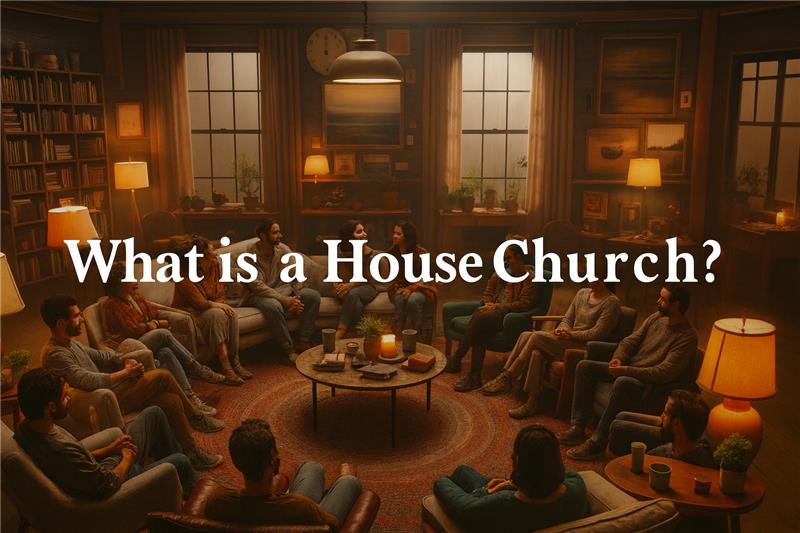
People often ask, what exactly is a biblical house church? The answer is simpler than many expect: a biblical house church is simply a biblical church that gathers in a home.
The location may change, but the biblical principles of church life and practice remain the same.
Related:
- Is It Time to Rethink Church?
- Explosive Church Growth in Cuba; Following Simple Biblical Truth
- Prophesy- Revival Coming to Cuba
- Suffering in Cuba Has Produced Massive Church Growth with no signs of Slowing Down
- Family: God’s Original Intent for the Church – It’s like the Church of Acts: dreams, visions, miracles, healings
Definition
A biblical house church is more than just a casual gathering. Historically, churches have been recognized by their commitment to shared faith, accountability, and structure. In that same way, biblical house churches maintain essential elements such as:
- Confessional foundations, affirming historic statements of faith.
- Appointed elders and deacons to provide leadership and care.
- A liturgical structure, or order of worship, guiding the gathering.
- Church membership, ensuring mutual responsibility and belonging.
- Regular gatherings that include prayer, worship, preaching, communion, giving, and Bible study.
In other words, a biblical house church is not simply a Bible study or a few families meeting informally. It is a true expression of the church—organized, accountable, and aligned with the faith and practice of historic Christianity.
Related:
- House Church or CHURCH that meets in the House: A Big Difference!
- Back to Basics for the Church
- Rethinking Church- Not Us and Them, Just US
- Church is an Organism, not an Organization
- Re -Thinking Church- Vision for the Outside
- Re –Thinking Church Revisited
Order of Worship in Corinth
Scripture itself gives instruction for the way believers are to gather. In his letter to the Corinthians, the Apostle Paul laid out clear patterns for worship in the early church:
1 Corinthians 14:26 (NIV)
“What then shall we say, brothers and sisters? When you come together, each of you has a hymn, or a word of instruction, a revelation, a tongue or an interpretation. Everything must be done so that the church may be built up.”
1 Corinthians 14:29–33 (NIV)
“Two or three prophets should speak, and the others should weigh carefully what is said.
And if a revelation comes to someone who is sitting down, the first speaker should stop.
For you can all prophesy in turn so that everyone may be instructed and encouraged.
The spirits of prophets are subject to the control of prophets.
For God is not a God of disorder but of peace—as in all the congregations of the Lord’s people.”
1 Corinthians 14:40 (NIV)
“But everything should be done in a fitting and orderly way.”
Related:
- Re-Thinking Church – Stats say it isn’t Working
- Re-thinking Church
- Re-Thinking Church- Institutionalized, Confined, and Contented?
- Rethinking Church: We made it Up, George Barna
- Re-Thinking Church: God is a God of order but his name is not Robert
Order of Worship (Corinthian Church Pattern)
- Gathering Together
- Believers assemble in a home setting (Acts 16:40; Romans 16:5).
- Atmosphere of fellowship and expectation.
- Participation by Many (1 Corinthians 14:26)
- Songs / Hymns — one or more share a hymn of worship.
- Teaching / Instruction — a believer shares a word of teaching from Scripture.
- Revelation / Prophecy — a message of encouragement or instruction given by the Spirit.
- Tongues and Interpretation — if someone speaks in tongues, another interprets for the group.
- Discernment — others listen and weigh the words carefully.
- Prophetic Order (1 Corinthians 14:29–31)
- Two or three prophets may speak in turn.
- Others test and discern what is said.
- If another receives revelation, the first yields the floor.
- Goal: all may learn and be encouraged.
- Self-Control and Peace (1 Corinthians 14:32–33)
- The Spirit does not overwhelm—each gift is exercised under self-control.
- God’s order is peace, not confusion.
- Closing the Gathering (1 Corinthians 14:40)
- Everything is done “decently and in order.”
- Fellowship, encouragement, and strengthening of the church.
- Communion, giving, or prayer may also be part of the gathering (cf. Acts 2:42; 1 Corinthians 11:23–26).
This biblical framework emphasizes both the freedom of the Spirit and the orderliness of God’s design, shaping how a house church—and any church—should function.
Related:
- Vine Seminar: Original Intent of the Church
- The Church is Good but Religion has to GO
- Acts 2:42 Vision: The Church of Acts and the Combine Harvest! “I saw Jesus face to face.” Chris Reed
- Five Keys to Spreading the Gospel: Insights from Steve Addison’s “Movements That Change the World
Conclusion
This distinction is important because house churches are sometimes misunderstood as informal or “rogue” groups of Christians with little accountability. While that may be true in certain cases, a biblical house church follows the same scriptural and historic patterns that define any faithful church.
Biblical house churches are not meant to compete with traditional churches but to complement them. For many believers, the smaller, home-based setting creates space for deeper fellowship, discipleship, and fruitfulness.
Related:
- “The Church is Not Structural but Organic” Charles Simpson
- Why I Choose to Believe the Bible: A Reflection on Faith and Reason, Voddie Baucham, Greg Lancaster
- CHURCH: What is it and What is it’s Purpose? God’s Original Intent?
- Family: God’s Original Intent for the Church
- Family: God’s Original Intent for the Church – It’s like the Church of Acts: dreams, visions, miracles, healings
Begin Your Journey Today
Jesus didn’t just call us to believe in Him—He called us to follow Him.
Step into the life He designed for you through
Emmaus Road’s The Commands of Jesus
.
This is more than learning—it’s an invitation to walk with Him, obey Him, and experience Him in a real and powerful way.
You don’t want to miss this exciting adventure Jesus has called you into.
Start now:
https://GregLancaster.org/StartHere