




Five Things We Will Learn
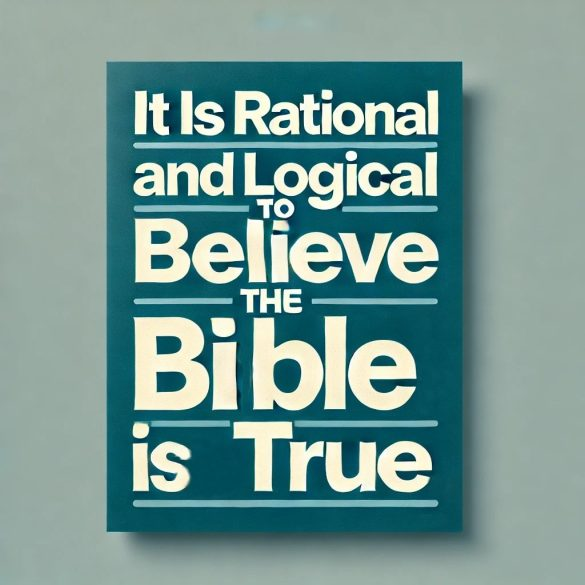
- The most important question in our culture today is why we choose to believe the Bible.
- Common answers like “I was raised that way” or “It works for me” are insufficient and open to logical challenges.
- The Bible is a reliable collection of historical documents written by eyewitnesses during the lifetime of other eyewitnesses.
- These documents report supernatural events fulfilled in specific prophecies.
- The writers claim their writings are divine rather than human in origin, inspired by the Holy Spirit.
Answering the Most Important Question
That brother did preach, didn’t he? Let me say I’m honored to be here tonight. But let me give you a little bit of the backstory. Dr. Gaines contacted me a while back and invited me to come preach there at his church in Gardendale later this summer. And after that invitation was sort of extended tentatively, he said I need to check you out first. So what do you do on June 19th? So I’m sort of here in view of a call to see if I’ll still be able to come later this summer.
I want to share something with you tonight that is a burden for me, mainly because of the backstory that was shared with you about my life—about my having come to faith late in life, not having grown up in church, not having grown up around Christians or around Christianity. I was raised in the projects in South Central Los Angeles by a single teenage mother who was a practicing Buddhist. And I never heard the gospel until I got to college. And I had questions—numerous questions, questions that needed to be answered. And I met someone who took the time to answer my questions.
And the wall that I want to talk about tonight is not necessarily a wall that we usually think about. It’s a wall, in fact, that hasn’t been torn down necessarily by our adversary, but in many instances it’s been torn down by us. You see, we responded to sort of rationalism and logical positivism and secular humanism. And in responding to those things that were so heady that they led us away from the passionate pursuit of a holy God, we have come almost full circle. Now the pendulum has swung in the other direction, and now in many instances we have become anti-intellectual. And we’ve moved beyond anti-intellectualism to now we’ve almost moved into mysticism. We are at a place where theology and doctrine are bad words. We are at a place where there’s a generation coming up that will believe anything if you say it with enough feeling.
So there is an intellectual wall that needs to be rebuilt. We need to be a people who continue to love the Lord our God with all our heart, all our soul, all our mind, and all our strength.
The Question We Must Answer
So I want to do three things for you tonight. One thing is this: I want to answer what I believe is the most important question that we can answer in our culture today. And secondly, I want to make an observation about that answer and then issue a challenge.
If you would, open your Bibles with me please to the book of 2 Peter, 2 Peter chapter 1.
Let me give you the question. Here is the question that I believe is the most important question for us to be able to answer, because legitimate questions deserve legitimate answers. Peter says in 1 Peter that we are always to be ready to give an apologia—a reasoned response—to anyone who asks us the reason for the hope that is within us.
Here’s that question. That question is: Why do you choose to believe the Bible?
That’s the question we must be able to answer in our culture today. It’s a legitimate question that deserves a legitimate answer. But you see, because of anti-intellectualism, we hear that question and usually we’ll say something like, well, I believe the Bible ’cause I was raised like that. Well, bless your spirit if that’s your answer, but please don’t go out of here and say that to anybody. I beg you, please don’t. Don’t do that. Because that is not a reasoned response. “I was raised that way” just doesn’t cut it.
Or sometimes, because we live in this culture of experientialism, sometimes because of this postmodern culture where what’s true for you is not necessarily true for me and experience is king, there is another answer with which we have become accustomed that we think is a great answer to the question. And it goes something like this: Why do you choose to believe the Bible? Well, I choose to believe the Bible because I tried it and it worked for me.
We say that and then we sort of back up a couple of steps, you know, kind of let the answer sit there like we really just did something. You did what you did was open a logical hole big enough to drive a Mack truck through. That’s what you did. Because if your only answer is you believe it ’cause you tried it and it works for you, what about that individual who used to be an alcoholic 10 years ago and he went to an AA meeting? They told him he needed a higher power. He couldn’t find a higher power. There was a squirrel that came outside of his window every morning. He decided that squirrel was going to be his higher power. Hadn’t had a drink in 10 years. Guess what? He tried the squirrel. The squirrel worked for him. According to your logic, his squirrel has as much authority as your Bible.
A Better Answer from Scripture
Let me give you an answer to that question that I believe is better than “I was raised that way” or it’s better than “Well, I’m a Southern Baptist and that’s the way we believe” or it’s better than “I tried it and it works for me.”
I want to tell you why I choose to believe the Bible. Because I don’t believe the Bible ’cause I was raised that way—’cause I wasn’t. I don’t choose to believe the Bible ’cause I tried it and it worked for me. My mother’s Buddhism worked for her. That’s why she was a Buddhist. I need something more than just because it works.
Here’s the answer. I’ll give it to you and I’ll unpack it for you.
I choose to believe the Bible because it is a reliable collection of historical documents written down by eyewitnesses during the lifetime of other eyewitnesses. They report to us supernatural events that took place in fulfillment of specific prophecies and claim that their writings are divine rather than human in origin.
In case you think I just made that up, 2 Peter chapter 1, beginning at verse 16.
For we did not follow cleverly devised tales when we made known to you the power and coming of our Lord Jesus Christ, but we were eyewitnesses of His majesty. For when He received honor and glory from God the Father, such an utterance as this was made to Him by the Majestic Glory: This is My beloved Son with whom I am well pleased—and we ourselves heard this utterance made from heaven when we were with Him on the holy mountain.
So we have the prophetic word made more sure, to which you do well to pay attention as to a lamp shining in a dark place, until the day dawns and the morning star arises in your hearts. But know this first of all, that no prophecy of Scripture is a matter of one’s own interpretation, for no prophecy was ever made by an act of human will, but men moved by the Holy Spirit spoke from God.
Unpacking the Reliability of Scripture
Now let’s unpack this. First of all, the Bible is a reliable collection of historical documents. Look at what he says here in verse 16: For we did not follow cleverly devised tales when we made known to you the power and coming of our Lord Jesus Christ. We did not follow cleverly devised tales. We did not follow myths or fairy tales or legends. We did not follow things that were made up.
Luke puts it this way in his prologue: Inasmuch as many have undertaken to compile an account of the things accomplished among us, just as they were passed down to us by those who were beforehand eyewitnesses and servants of the word, it seemed fitting to me, having investigated everything carefully from the beginning, to write it out for you in consecutive order, most excellent Theophilus, so that you might know the exact truth about the things you have been taught.
We have a reliable collection of historical documents—not myths, not fairy tales, not legends. This is not the Gilgamesh Epic here. These are things that actually transpired in history and were recorded for us.
Not only do we have a reliable collection of historical documents, but they were written down by eyewitnesses during the lifetime of other eyewitnesses. Look at what he says: But we were eyewitnesses of His majesty.
Anybody love crime dramas? I love crime drama. Quincy was the man. Nowadays they got CSI. CSI is just Quincy on crack, that’s all that is.
You know what would mess up an episode of Quincy or CSI? If early on you have corroborating eyewitness testimony—you got no mystery then. That’s what we have when we read the Bible: corroborating eyewitness testimony.
Turn with me to the right and look at what John says in his epistle: What was from the beginning, what we have heard, what we have seen with our eyes, what we have looked at and touched with our hands, concerning the Word of Life… the life was manifested, and we have seen and testify and proclaim to you the eternal life, which was with the Father and was manifested to us—what we have seen and heard we proclaim to you also.
Eyewitnesses.
In 1 Corinthians chapter 15, Paul says that Jesus was resurrected. After He was resurrected, He appeared
to Peter, then to the twelve, then to all the disciples at once, then to over 500 brethren at one time. And he says these words: most of whom remain until now.
When you do the math, you realize that when 1 Corinthians was written, there were over 300 eyewitnesses at least of the resurrection of Jesus Christ who were still alive during that time.
Addressing Common Objections
Oh, I hear you. You’re well-educated people. You’ve heard the arguments. Yes, brother, I understand that. But you see, what happened was there were individuals who came and doctored the Bible up, and it’s been translated so many times and it’s been changed so many times.
And when I talk to college students, sometimes they tell me about this myth of these overzealous monks who went out and changed the Bible so that things would match up, so that it would look like we have older documents than we actually have. We don’t have any of the originals.
Listen to me: If overzealous monks wanted to change the Bible, can I explain to you what they would have had to do? Three levels of conspiracy.
Level number one: They would have had to have a manuscript conspiracy. When we’re talking about just the New Testament itself, there are over 6,000 manuscripts or portions of manuscripts for the New Testament itself.
Compare that to Julius Caesar’s Gallic Wars—around 10 manuscripts. Aristotle’s Poetics—nearly five. Herodotus—less than 10. Homer—less than 10 of each.
When it comes to the New Testament, we have 6,000 manuscripts or portions of manuscripts. We can get earlier than AD 120 with some of the copies that we have. For Julius Caesar’s Gallic Wars, the earliest thing we can put our hands on was written 900 years after the original. For Aristotle—1,400 years after the original.
So if these overzealous monks wanted to doctor the Bible, they would have to find over 6,000 manuscripts, change all of them, not show their ink work, get them all back where they stole them from, and never tell anybody what they did.
That’s just level number one.
Level number two: Jesus said go and make disciples of ta ethne—every people group. People groups tend to speak different languages. So within the first few centuries, we have the Bible translated into Syriac, Coptic, and Latin. Now these overzealous monks have to find 6,000 Greek manuscripts, change those, doctor them up, don’t show your ink work, get them back. Go find all the Syriac, Coptic, and Latin translations, change those to match the lies that you told in another language, and get those back.
Level number three: The early church fathers had this terrible habit of writing commentary on the New Testament. So much so that Bruce Metzger argues if all we had of the New Testament was the quotations and citations by the early church fathers, we could reproduce over 95% of the New Testament just from their writings.
So now these overzealous monks have to find 6,000 manuscripts, change them, get them back; find Syriac, Coptic, and Latin translations, change those, get them back; then find all of the writings of all of the early church fathers, change those to match the lies that they told two layers ago, get those put back, never tell anybody what they did, and never ever get caught.
We have a reliable collection of historical documents written down by eyewitnesses during the lifetime of other eyewitnesses.
Supernatural Events and Fulfilled Prophecy
So far we just got a good history book. Now it gets good.
They report to us supernatural events. Look at what he says here, verse 17: For when He received honor and glory from God the Father, such an utterance as this was made to Him by the Majestic Glory: This is My beloved Son with whom I am well pleased—and we ourselves heard this utterance made from heaven when we were with Him on the holy mountain.
Now we got the Mount of Transfiguration. Now we got supernatural events—not superhuman events. We have supernatural events. Stuff you can’t get good enough to do.
We’re not talking about psychosomatic healings. We’re talking about a woman with an issue of blood who is healed instantly. The man with a withered hand—healed instantly. Men who were blind from birth, deaf from birth, mute from birth, lame from birth—healed instantly.
Jesus tells the disciples, y’all go over to the other side of the lake. I’ll meet you later—walking on water.
Or my favorite of them all: Friday dead, Sunday risen.
We have a reliable collection of historical documents written down by eyewitnesses during the lifetime of other eyewitnesses. They report to us supernatural events—and those events took place in fulfillment of specific prophecies.
We’re not talking that general Nostradamus-type stuff—specific prophecies.
For example, when Jesus is on the cross—interestingly, when He’s on the cross, let’s imagine: Go back to the first century. We’re Jewish people. We probably talk about our Old Testament. Maybe we use Aramaic when we speak to one another.
If I wanted you to open your Bible to Psalm number 22, I couldn’t tell you to open to Psalm number 22 because we’ve only had chapters and verses for a few hundred years. If it was the first century and I was speaking to you in Aramaic and I wanted you to turn to Psalm number 22, I would have to tell you to turn to the title of Psalm number 22, which would have been the first line of Psalm number 22. So I’d have to tell you to open your scroll to: Eli, Eli—or My God, my God, why have You forsaken me?
Now that ought to sound familiar because it’s exactly what Jesus said while He was being crucified.
Psalm 22:1—My God, my God, why have You forsaken me?
Verse 6: I am a worm and not a man, a reproach of men and despised by the people.
All who see me sneer at me; they separate with the lip, they wag the head, saying, Commit yourself to the Lord; let Him deliver him; let Him rescue him, because He delights in him.
Sound familiar? That’s what’s being said to Jesus while He’s being crucified.
Verse 12: Many bulls have surrounded me; strong bulls of Bashan have encircled me. They open wide their mouth at me, as a ravening and a roaring lion. I am poured out like water, and all my bones are out of joint. My heart is like wax; it is melted within me.
Interesting—pierce Him in the side, puncture the pericardium, blood and water rush out.
Verse 15: My strength is dried up like a potsherd, and my tongue cleaves to my jaws.
How about this—wine vinegar on the sponge. Jesus, because You did say I thirst.
Verse 16: Dogs have surrounded me—folks, that’s Gentiles—a band of evildoers has encompassed me. One on the right and one on the left. They pierced my hands and my feet. I can count all of my bones.
Why? Because nobody had to break Your legs to hasten Your death.
They divide my garments among them, and for my clothing they cast lots.
Folks, that was written a thousand years before Jesus was born. It was written by a man who never once saw crucifixion in his life because crucifixion had not yet been invented.
That is why Peter can say back in our passage, verse 19: So we have the prophetic word made more sure.
We have a reliable collection of historical documents written down by eyewitnesses during the lifetime of other eyewitnesses. They report to us supernatural events that took place in fulfillment of specific prophecies.
Divine Rather Than Human in Origin
And then here’s the kicker: They claim their writings are divine rather than human in origin.
Look down with me, verse 20: But know this first of all, that no prophecy of Scripture is a matter of one’s own interpretation, for no prophecy was ever made by an act of human will, but men moved by the Holy Spirit spoke from God.
They claimed these are God’s words and not theirs. That’s why these prophecies were fulfilled hundreds or thousands of years afterwards. That’s why they use phrases like “thus says the Lord” and “the Lord spoke to Moses saying” and “God said to Abraham.” They say these are God’s words and not men’s words.
Oh, I hear you. But see, that’s the problem. Nobody wants to believe that because they know that men wrote the Bible. And when we say it’s the word of God, they say no, it’s the word of men because men took pen to paper. And you cannot trust things that were written by men.
That’s always interesting to me. You know why? ‘Cause back in school, I don’t remember anybody in math class—you got something wrong, you’re supposed to use Pythagorean theorem, a squared plus b squared equals c squared—you didn’t use it, you got this wrong. You can’t mark me off for that. That came out of a math book. A man wrote that math book. That means it’s fallible.
Just because man took pen to paper doesn’t mean you can’t trust what’s written. The question you ask is this: Is what’s written reliable? Is it internally consistent? Is it corroborated?
Well, what’s corroboration? Maybe three languages—Greek, Hebrew, Aramaic. Three continents—Asia, Africa, Europe. Over 40 authors, most of whom never met one another, who wrote over a period of some 1,500 years and tell one singularly woven together story. How’s that for corroboration?
When people say, you believe that Bible, but I’m a man of science and unless you can prove it to me scientifically, I just can’t believe that.
How you going to sit here and tell me you’re a man of science and you’d believe it if I proved it to you scientifically? Why do you want me to use the scientific method? Do you not realize that you don’t use the scientific method on historical events?
In order to use the scientific method, something has to be observable, measurable, and repeatable. Folks, you can’t use the scientific method to prove that George Washington was our first president. Why? Because his presidency is not observable, measurable, and repeatable.
You use a more evidentiary method there. So what you do is like what we do in a courtroom. You say: Do we have any eyewitnesses? Well, I just told you we got some of those. Do the eyewitnesses tell the same story? Yep—Friday dead, Sunday risen. They say something’s going to happen and it happens exactly the way they said.
You see, we have no external evidence that would argue against the Bible’s claim to be the word of God. None.
So the real intelligent thing to do is to believe what it says.
So I don’t choose to believe the Bible just ’cause I was raised that way—I wasn’t. I don’t choose to believe the Bible just ’cause I tried it and it works for me.
I choose to believe the Bible—now say this with me if you will—because it is a reliable collection of historical documents written down by eyewitnesses during the lifetime of other eyewitnesses. They report supernatural events that took place in fulfillment of specific prophecies and claim that their writings are divine rather than human in origin.
An Observation and a Challenge
I told you I wanted to do three things. Number one, I wanted to answer this question that I believe is a pertinent question in our culture that we have to be able to answer. It’s a legitimate question that deserves a legitimate answer.
Secondly, I told you I wanted to make an observation. Pastors in the room, listen to me: I just shared an expository sermon. I preached the text in its context. I did not try to be more creative than God. It’s what I like to call expository apologetics.
The Bible answers every relevant question. All Scripture is God-breathed and profitable for teaching, rebuking, correcting, training in righteousness—all of it. His divine power has given us everything we need for life and godliness through the knowledge of Him who called us by His own glory and excellence.
Here’s what I’m worried about. There’s a lot of us who believe in the inerrancy of Scripture, but some of us don’t preach like we believe in the sufficiency of Scripture.
Don’t let anybody tell you that exposition is a thing of the past. I hope I didn’t bore you because a lot of people say exposition is boring. I hope you weren’t bored. A lot of people say exposition is irrelevant. I believe I just answered what I would argue is the most relevant question that our culture is asking—and did it verse by verse, precept upon precept, line upon line.
Which brings me to the third thing, and that’s the challenge. We have got to teach the people of God, number one, that the Bible has the answer, and number two, how to learn it and give it.
Anybody who can memorize this passage of Scripture in its context can learn how to give the answer that I just gave you. Anybody.
Folks, that’s why we wrote the Ever Loving Truth. That’s why I wrote the Ever Loving Truth Bible study. That’s what it’s all about—for people to get this into their minds so that when somebody asks them a question like why do you choose to believe the Bible, they don’t have to fumble around and hem and haw. They don’t have to give some lame answer like, you know, I was raised that way or I tried it and it works for me.
They can look people in the eye—like a young lady from Dartmouth College where I was teaching this, who looked a science professor of hers in the eye and for the first time in her life felt confident enough to speak up in the classroom and looked at him and said, well sir, I choose to believe the Bible because it’s a reliable collection of historical documents written down by eyewitnesses during the lifetime of other eyewitnesses. They report supernatural events that took place in fulfillment of specific prophecies and claim that their writings are divine rather than human in origin.
And by the way, if you want to, you can put some gravy on top of it: I tried it. It worked for me.
More Facts About the Bible
The Bible holds numerous world records related to its publication, distribution, and sales. Here are the key records and statistics:
- Most Printed and Sold Book
- The Bible is the best-selling book of all time, with an estimated 5 to 7 billion copies sold and distributed worldwide, according to Guinness World Records.
- Its sales far exceed any other book in history and continue to grow annually, with an estimated 100 million Bibles printed each year.
- Most Translated Book
- The Bible is the most translated book in the world. As of 2024:
- The New Testament has been translated into over 1,600 languages.
- The entire Bible is available in over 700 languages.
- Portions of the Bible are available in over 3,600 languages, covering about 97% of the world’s population.
- Widest Geographic Distribution
- The Bible has been distributed across every continent and country, often overcoming significant barriers, such as political restrictions or cultural challenges. Organizations like the Gideons International and the United Bible Societies have played a significant role in global distribution.
- Oldest Printed Book
- The Gutenberg Bible, printed around 1455 by Johannes Gutenberg in Mainz, Germany, was the first major book printed using movable type. It marked the beginning of the mass production of books and is considered one of the most valuable printed books today.
- Longest Continuous Publication
- The Bible has been in continuous publication since its initial compilations were finalized, dating back to the early centuries of Christianity (circa 4th century CE for the canonization of the Christian Bible).
- Most Read Book
- The Bible is the most read book globally, serving as a central text for billions of Christians and influencing culture, laws, and literature. Even outside of religious contexts, its impact on world history is unparalleled.
- Most Smuggled Book
- The Bible is also one of the most smuggled books, with clandestine efforts to distribute it in regions where religious texts are banned or heavily restricted, such as North Korea or parts of the Middle East.
- Most Gifted Book
- The Bible is often given as a gift, particularly during life milestones like baptisms, confirmations, weddings, and other ceremonies.
- First Book in Space
- The Bible was taken to the moon aboard Apollo 14 in 1971. A microfilm copy containing all 1,245 pages of the King James Version traveled with astronaut Edgar Mitchell.
- Largest Bible
- The largest Bible in the world is a massive King James Version created by Louis Waynai in 1930. It weighs over 1,000 pounds and is 43.5 inches tall, 98 inches wide when open, and 34 inches thick.
- Most Expensive Bible
The Gutenberg Bible is one of the most valuable books in the world, with individual copies or fragments valued in the tens of millions of dollars. A single leaf of the Gutenberg Bible can sell for over $100,000.
Which Bible Version Is Best for You?
The top 5 most-read versions of the Bible vary depending on region, denomination, and language, but the following versions are globally recognized as the most popular based on sales, distribution, and readership:
- King James Version (KJV)
- Why It’s Popular:
- Known for its majestic, poetic language and literary influence.
- A standard Bible for many Protestant denominations, especially in English-speaking countries.
- First published in 1611, it remains a cornerstone for traditional Bible study and worship.
- Commonly Used By: Evangelicals, Baptists, and traditional Protestant denominations.
- Why It’s Popular:
- Balances readability and accuracy to the original texts, making it accessible for modern readers.
- First published in 1978, it quickly became a favorite for personal devotion and church use.
- Widely used in Evangelical churches and study groups.
- Commonly Used By: Evangelicals, non-denominational Christians, and youth groups.
- New Living Translation (NLT)
- Why It’s Popular:
- Focuses on readability with a dynamic equivalence translation approach, making it easy to understand.
- Popular among newer generations and those seeking practical application in daily life.
- Commonly Used By: Youth ministries, casual readers, and devotional users.
- English Standard Version (ESV)
- Why It’s Popular:
- A more literal translation than the NIV, preferred by those looking for accuracy while retaining readability.
- Often used in academic study and expository preaching.
- Published in 2001, it has become a favorite for Bible scholars and pastors.
- Commonly Used By: Reformed Christians, scholars, and in churches focused on expository teaching.
- New King James Version (NKJV)
- Why It’s Popular:
- Retains the literary beauty of the KJV while modernizing archaic language.
- First published in 1982, it appeals to those who value tradition with updated readability.
- Commonly Used By: Those transitioning from the KJV and traditional Protestant Christians.
6. Life Application Study Bible (LASB)
Commonly Used By: Christians of all maturity levels, including individuals, small groups, and churches, seeking to apply Scripture to everyday life.
Why It’s Popular:
The Life Application Study Bible (LASB) is popular for its practical approach to connecting Scripture with everyday life.
Audience: It is widely used by new believers, seasoned Christians, and study groups seeking real-life application of biblical teachings.
Translation Options: It is available in multiple translations, such as NIV, NLT, and KJV, to cater to diverse reader preferences.
Study Notes: The Bible includes over 10,000 notes that provide explanations, historical context, and cultural insights.
Character Profiles: It features profiles of biblical figures to help readers learn life lessons from their stories.
Maps and Charts: Maps and charts visually represent events and genealogies for better understanding.
Book Introductions: Each book includes an introduction that explains its themes, significance, and historical background.
Begin Your Journey Today
Jesus didn’t just call us to believe in Him—He called us to follow Him.
Step into the life He designed for you through Emmaus Road’s The Commands of Jesus . This is more than learning—it’s an invitation to walk with Him, obey Him, and experience Him in a real and powerful way.
You don’t want to miss this exciting adventure Jesus has called you into.
Start now:
https://GregLancaster.org/StartHere