



Five Things We Will Learn
- Chinese church leaders willingly endure extraordinary hardship to receive biblical teaching and strengthen the believers under their care.
- Persecution has not stopped the underground church from growing, multiplying, and making disciples.
- Believers who possess very few Bibles may treasure and memorize Scripture more faithfully than those who own several.
- Comfort, convenience, and personal preferences can quietly weaken our hunger for God and commitment to His people.
- The American church should not merely pray for persecuted believers to receive our freedom. We should pray to receive their hunger, courage, endurance, and devotion.
A Gathering That Could Cost Them Their Freedom
What would you risk to gather with other believers, study the Bible, and receive the training needed to make disciples?
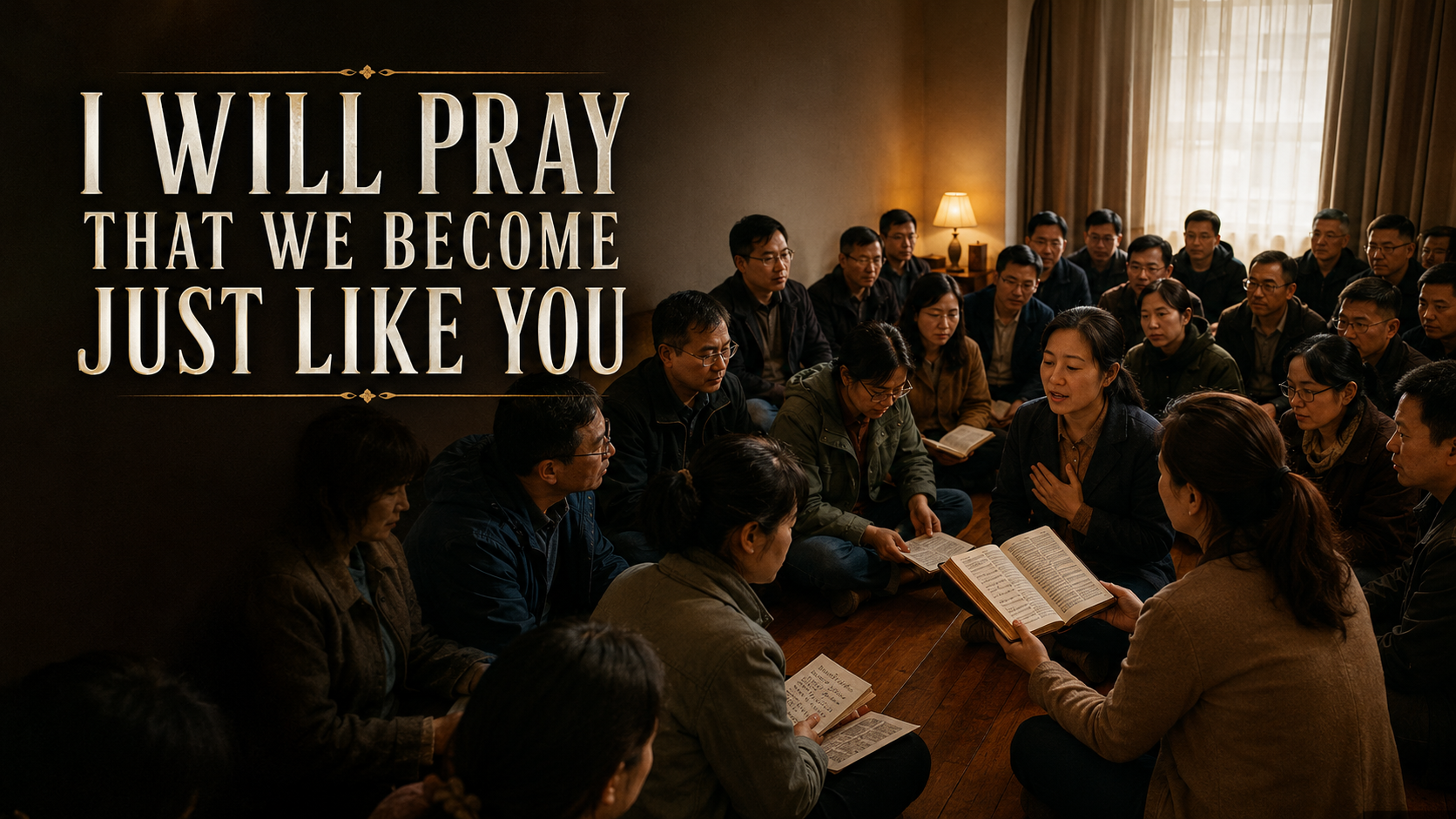
Would you travel 13 hours by train? Would you enter a hotel two people at a time to avoid attracting attention? Would you sit on a hardwood floor without air conditioning for three days? Would you continue gathering if being discovered could mean three years in prison?
For 22 church leaders from China’s Hunan Province, these were not hypothetical questions. They were part of the cost of following Jesus.
Pastor Wayne Cordeiro shared their remarkable story at the Awaken to Leadership Conference. His testimony reveals the striking contrast between believers who risk everything to gather around the Word of God and believers who allow inconvenience to keep them away.
Cordeiro said:
“We go to China from time to time, and we train leaders. This time, we brought in 22 leaders from the Hunan Province. They rode 13 hours on a train to get to a hotel. They came up two by two in the elevators so as not to draw any attention.
They gathered in a small hotel apartment that was only about 700 square feet. In the little living room, there was no air conditioning, only a hardwood floor. All 22 of them sat there.
When you teach in China, you start at eight in the morning, and you do not finish until five at night. You teach the entire day.
They were all sitting there, and I looked around and asked, ‘If we get caught, what will happen to me?’
They said, ‘Oh, you’ll be deported within 24 hours, and we’ll go to prison for three years.’
I said, ‘You’re kidding. How many of you have been in prison for your faith?’
Eighteen of the 22 raised their hands.
‘No way!’
I looked at them and said, ‘How many people do you oversee?’
They were all small-group leaders and underground church leaders in the Hunan Province.
I said, ‘If you counted all the people under your leadership, how many would there be?’
They counted them and said, ‘A little over 20 million.’
I said, ‘What?’
You see, we forget that there are 1.3 billion people in China. This is crazy!
I had 15 Bibles, and I passed them out. Obviously, seven people did not receive one.
I said, ‘Let’s turn to 2 Peter, chapter 1, and read it.’
Just then, one lady handed her Bible to the person next to her. I thought, ‘Hmm, interesting.’
We turned there, and as we began reading, I understood why she had given her Bible away. She had memorized the entire chapter. She simply recited the whole chapter.
When we finished, I went over to her during a break and said, ‘You recited that entire chapter.’
She said, ‘Oh, yes. I’ve memorized many chapters.’
I asked, ‘Where did you memorize those chapters?’
She said, ‘In prison.’
I asked, ‘Did you have much time in prison?’
Then I said, ‘But don’t they confiscate the Bible?’
She said, ‘Yes, so people bring in Scriptures written on pieces of paper.’
I asked, ‘But if they find that piece of paper on you, won’t they confiscate it?’
She said, ‘Oh, yes. That’s why you memorize it as fast as you can. Even though they can take the paper away, they can’t take what is hidden in your heart.’
Wow!
After three days, you fall in love with these people. When it was over, I said, ‘How can I pray for you? I’m going back to America. You have been so wonderful. How can I pray for you?’
They said, ‘You know, in America, you can gather like this whenever you want to. We can’t. Could you pray that one day we’ll be just like you?’
I looked at them and said, ‘I will not do that.’
They looked at me with wide, incredulous eyes and asked, ‘Why?’
I said, ‘Because you rode a train for 13 hours to get here. In my country, if people have to drive more than an hour, they don’t come.
‘You sat on a wooden floor for three days. In my country, if people have to sit for more than 40 minutes, they leave.
‘You sat here for three days on a hard wooden floor, and you did it without air conditioning. In my country, if there aren’t padded pews and air conditioning, people often don’t come back.
‘In my country, we have an average of two Bibles per family, but we don’t read any of them. You hardly have any Bibles, yet you memorize the Scriptures from pieces of paper.
‘I will not pray that you become like us, but I will pray that we become just like you.’”
Eighteen Had Already Been Imprisoned
Eighteen of the 22 leaders had been imprisoned for their faith. Yet they continued gathering, learning, leading, and making disciples.
Prison had not silenced them. Threats had not stopped them. Government restrictions had not destroyed their devotion to Jesus or their commitment to His people.
Their response challenges a comfortable understanding of discipleship. Jesus never promised that following Him would always be safe or convenient. He told His disciples:
“If anyone would come after me, he must deny himself and take up his cross daily and follow me.”
Luke 9:23, NIV 1984
The Chinese leaders understood that following Jesus could cost them their comfort, freedom, and even their lives. They continued following Him anyway.
Their example confronts us with an important question: How easily do we allow inconvenience to interfere with our obedience?
Twenty-Two Leaders Overseeing Millions
These were not celebrity ministers standing on stages before enormous crowds. They were small-group leaders and underground church leaders quietly caring for believers and making disciples.
Together, they represented leadership reaching more than 20 million people.
The underground church demonstrates that the Kingdom of God does not depend upon impressive buildings, enormous budgets, padded seats, or highly produced programs. It advances through ordinary believers who obey Jesus, make disciples, and faithfully teach others to do the same.
The church can live, grow, and multiply in homes, apartments, hotel rooms, and other simple gathering places. Jesus promised:
“For where two or three come together in my name, there am I with them.”
Matthew 18:20, NIV 1984
The presence and authority of Jesus do not depend upon the size, comfort, or public recognition of the gathering.
When the Word Is Hidden in Your Heart
One of the most powerful moments in Cordeiro’s account came when a woman handed her Bible to another believer. She did not need to hold the Bible because she had memorized the entire first chapter of 2 Peter.
She had learned it while imprisoned.
Believers brought Scripture into the prison written on pieces of paper. Because the authorities could confiscate those pieces at any time, she memorized the words as quickly as possible.
Her explanation was simple and profound:
“Even though they can take the paper away, they can’t take what is hidden in your heart.”
This is the living reality of Psalm 119:11:
“I have hidden your word in my heart that I might not sin against you.”
Psalm 119:11, NIV 1984
Many American families possess more Bibles than they regularly read. We have printed Bibles, study Bibles, audio Bibles, Bible applications, online commentaries, podcasts, sermons, and countless teaching resources. Yet having access to Scripture is not the same as treasuring it.
The woman in China possessed something no prison guard could confiscate. God’s Word had moved from a piece of paper into her heart.
If our physical Bibles were suddenly taken from us, how much of God’s Word would remain within us?
When Comfort Becomes a Spiritual Weakness
The contrast Cordeiro described is difficult to ignore.
The Chinese leaders traveled 13 hours to attend the training. Many Americans will not drive one hour.
They sat on a hard wooden floor for three days. Many Americans become restless when a gathering lasts longer than 40 minutes.
They met without air conditioning, knowing that discovery could lead to imprisonment. Many Americans decide whether to return based upon the comfort of the seats, the temperature of the room, or whether the gathering meets their personal preferences.
Comfort is not sinful, but it becomes dangerous when we allow it to determine whether we will obey God.
When following Jesus must remain convenient, our preferences become more authoritative than His commands. When gathering with believers must always be comfortable, entertaining, and easy, we may be revealing how little we understand the value of the church, the Word of God, and the presence of Jesus.
Scripture warns us:
“Do not merely listen to the word, and so deceive yourselves. Do what it says.”
James 1:22, NIV 1984
The question is not merely whether we can attend a gathering. The question is whether we hunger for God enough to gather, learn, obey, and make disciples even when doing so requires sacrifice.
Do We Truly Hunger for God?
The Chinese believers were not forced to endure those conditions. They chose to come because they were hungry for God, hungry for His Word, and committed to leading His people faithfully.
Jesus said:
“Blessed are those who hunger and thirst for righteousness, for they will be filled.”
Matthew 5:6, NIV 1984
Spiritual hunger changes what we are willing to endure. A hungry person does not demand perfect conditions before receiving food. A believer who is truly hungry for God will not allow every inconvenience, distraction, or discomfort to separate them from His Word and His people.
These leaders understood the value of what they were receiving. They knew that biblical teaching would help them strengthen the believers entrusted to their care. Their hunger was connected to responsibility. They were not only learning for themselves. They were being equipped to serve millions of others.
The Prayer America Needs
When the Chinese leaders asked Cordeiro to pray that they could one day become like American believers, he refused.
His refusal was not a rejection of their desire for freedom. Religious freedom is a precious gift, and we should pray for believers who are persecuted, imprisoned, and mistreated because of their faith in Jesus.
But Cordeiro recognized that the persecuted believers possessed something the comfortable church desperately needs.
They had hunger.
They had endurance.
They treasured the Word of God.
They valued gathering with other believers.
They accepted the cost of discipleship.
They continued making disciples even when doing so placed their freedom at risk.
The American church does not merely need to pray that persecuted believers become free like us. We must also pray that we become faithful like them.
We need their hunger for Scripture, their willingness to sacrifice, their courage under persecution, their devotion to gathering, and their determination to obey Jesus regardless of the cost.
If Our Freedom Disappeared
Freedom can be a great blessing, but it can also be taken for granted.
We can gather openly. We can carry Bibles publicly. We can worship, preach, teach, evangelize, and make disciples. Most American believers can do these things without expecting arrest or imprisonment.
The question is not whether we possess these freedoms. The question is what we are doing with them.
Are we reading the Bibles we freely own?
Are we gathering with believers while we are still free to do so?
Are we making disciples?
Are we teaching others to obey everything Jesus commanded?
Are we hiding God’s Word in our hearts?
Are we preparing ourselves to remain faithful if obedience becomes costly?
The persecuted church reminds us that faithfulness is not produced by favorable circumstances. It is produced by loving Jesus more than comfort, convenience, reputation, and personal safety.
May We Become Just Like Them
We should pray for the persecuted church. We should remember those who are imprisoned and stand with believers who suffer because they belong to Jesus.
“Remember those in prison as if you were their fellow prisoners, and those who are mistreated as if you yourselves were suffering.”
Hebrews 13:3, NIV 1984
But we should also allow their lives to examine ours.
May we treasure every opportunity to gather.
May we read and memorize the Scriptures while they are freely available to us.
May we refuse to let comfort determine our obedience.
May we make disciples wherever God has placed us.
May we remain faithful when following Jesus becomes costly.
And may our prayer be the prayer Wayne Cordeiro offered after spending three days with those courageous leaders:
“I will not pray that you become like us, but I will pray that we become just like you.”
Begin Your Journey Today
Jesus didn’t just call us to believe in Him—He called us to follow Him.
Step into the life He designed for you through Emmaus Road’s The Commands of Jesus . This is more than learning—it’s an invitation to walk with Him, obey Him, and experience Him in a real and powerful way.
You don’t want to miss this exciting adventure Jesus has called you into.
Start now:
https://GregLancaster.org/StartHere