



Five Things We Will Learn
- Why worship environments are intentionally louder than casual settings, yet still safe
- The decibel ranges of worship music compared to everyday conversation and concerts
- How worship sound levels compare to auto shop noise and gunfire
- What NIOSH guidelines say about safe listening exposure over time
- Practical ways churches can balance powerful worship with hearing safety
Understanding the Sound of Worship
For worship music, like when everyone is lifting hands, singing loudly, and the band (music) is fully engaged, it is naturally louder than quiet or casual listening environments. Most modern churches aim for an average of ninety to ninety-five decibels during a worship set, with peaks reaching ninety-eight to one hundred during the most powerful moments.
To put that into perspective, casual conversation sits around sixty decibels, while rock concerts can exceed one hundred ten decibels. Worship, therefore, lives in a middle space. It is energetic and immersive, but not extreme.
This range is intentional. It allows the congregation to hear themselves sing, which is essential for genuine participation in worship. If the sound is too loud, people feel overwhelmed and stop singing. If it is too quiet, the atmosphere feels flat and disengaged. The goal is a balanced environment where voices and music blend together.
Why This Range Matters for Safety
Sound levels in worship are not just about experience, they are also about stewardship of people’s well-being.
According to NIOSH, eighty-five decibels is considered safe for up to eight hours of exposure. As sound levels increase, safe exposure time decreases. At ninety-five decibels, the recommended safe exposure time is about two hours.
Most worship sets last between twenty and thirty minutes, often averaging around ninety-three decibels. This means a typical weekly worship experience falls well within safe exposure limits. In practical terms, this level of sound should not result in hearing damage or ringing ears the next day.
What a Worship Environment Looks Like
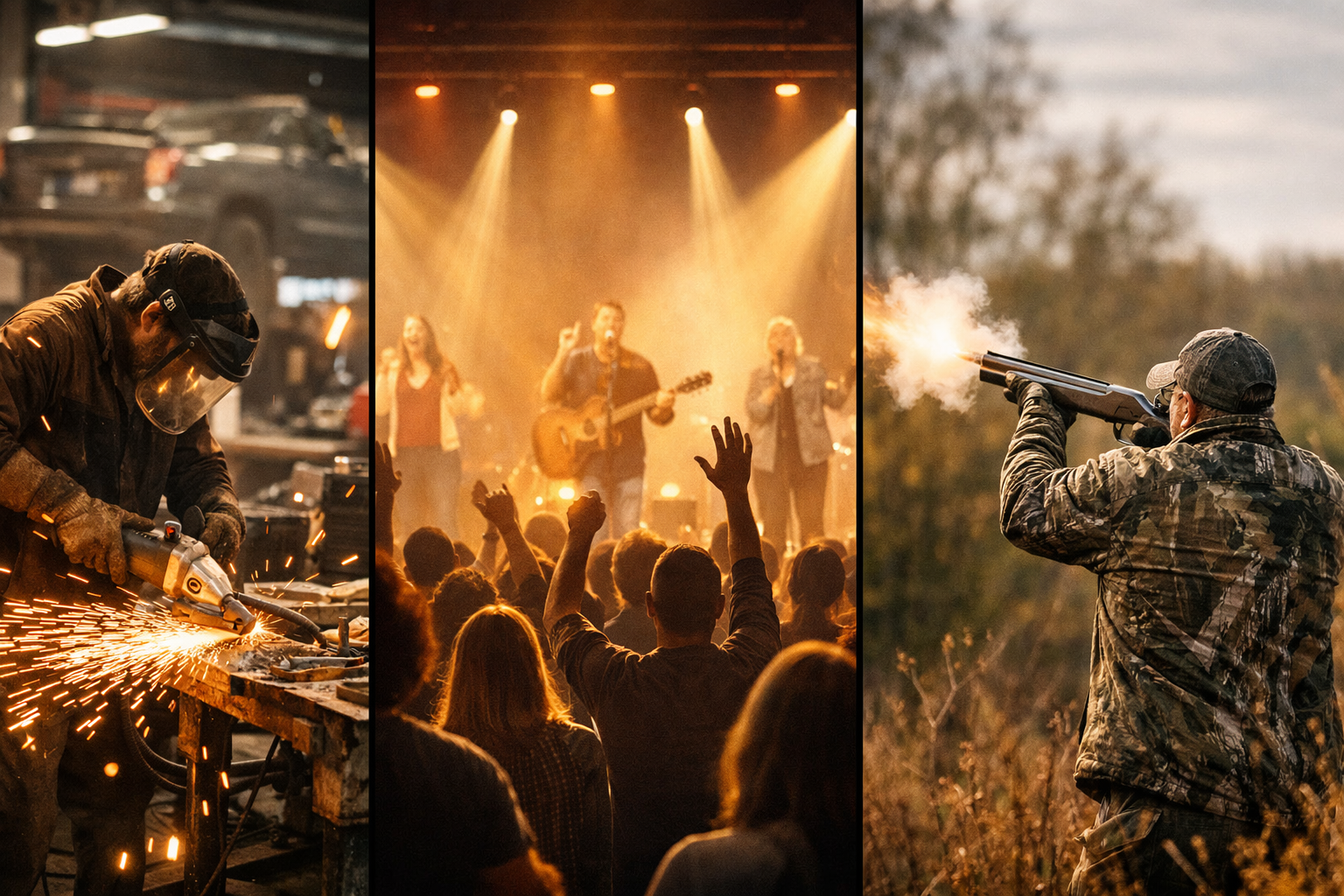
In a full worship setting, the environment is vibrant and engaging. People are actively participating, hands are raised, voices are unified, and the band (music) is fully engaged.
You might see:
- A packed room with lights illuminating the space
- A congregation singing together without shouting over the music
- A balanced sound where energy is present, but clarity remains
These environments are designed to foster connection, not overwhelm.
How Churches Set Sound Levels Properly
Churches that prioritize both excellence and care take practical steps to manage sound levels.
One common method is using a sound meter app, such as Decibel X, placed at ear level in the middle of the room. A good target is around ninety-two decibels on average, with peaks capped at ninety-nine.
Audio engineers also monitor levels directly from the soundboard, adjusting in real time to maintain consistency. Visual tools, like decibel graphs, can help teams track levels and ensure they stay within safe ranges.
If sound levels are too high, people tend to complain and disengage. If too low, the atmosphere loses its impact. The goal is always balance, creating an environment where the Spirit can move while also protecting people.
Some churches have even begun posting “hearing safe” signs as part of their commitment to care for their congregations.
Comparing Worship to Real-World Noise
To truly understand worship sound levels, it helps to compare them with other common environments.
Auto Body Shop Noise
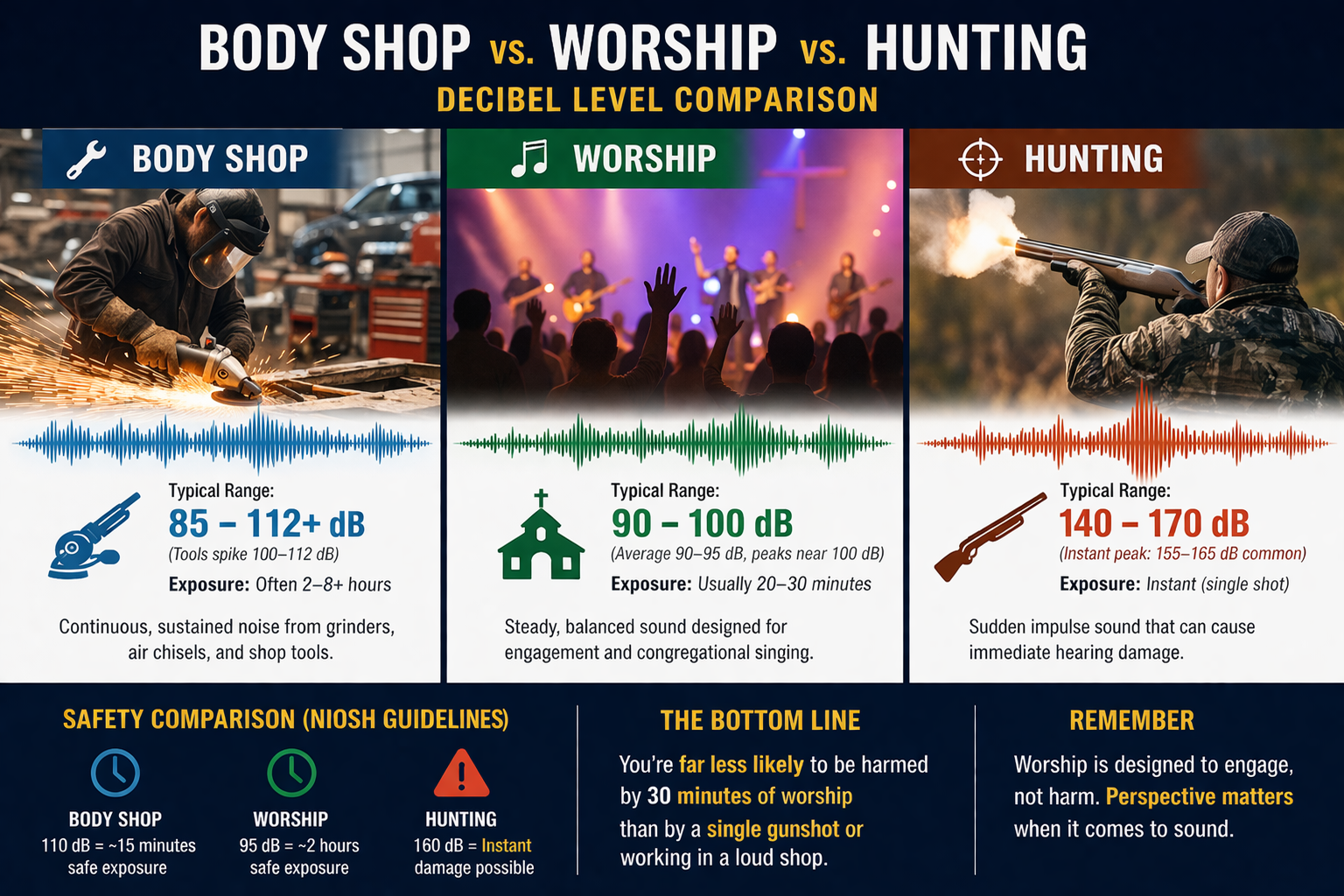
In an auto body shop, background noise typically ranges from eighty-five to ninety-five decibels. However, tools like angle grinders and air chisels can spike between one hundred and one hundred twelve decibels or higher. These sounds are not only loud but often sustained for hours at a time.
Shotgun or Rifle Fire
A shotgun or rifle blast produces an instantaneous peak between one hundred forty and one hundred seventy decibels, most commonly around one hundred fifty-five to one hundred sixty-five. This is not gradual sound. It is a sudden, explosive impulse that can cause immediate and permanent hearing damage from a single exposure without protection.
Worship Music in Church
Worship music typically averages ninety to ninety-five decibels, with peaks around ninety-eight to one hundred. Unlike gunfire or industrial noise, worship sound is steady and controlled, not sudden or explosive.
Stacking It Up: What Is Actually Safer?
When these environments are compared side by side, the difference becomes clear.
At ninety-five decibels, safe exposure time is about two hours. A thirty-minute worship set uses only a fraction of that limit, making it generally safe for regular participation.
A single shotgun blast at around one hundred sixty decibels can cause instant damage, even with just one exposure if hearing protection is not used.
Working in a shop at one hundred ten decibels for thirty minutes already exceeds recommended exposure limits. At that level, safe exposure is closer to fifteen minutes before risk significantly increases.
The conclusion is straightforward. You are far less likely to experience hearing damage from thirty minutes of worship than from firing a gun or working in a loud shop environment.
Finding the Right Balance
Worship is meant to be engaging, powerful, and participatory. Sound plays a critical role in that experience. However, it must always be managed with wisdom.
Too loud, and people withdraw. Too quiet, and the moment loses its impact. The right balance allows people to engage fully, hear one another, and remain safe.
Well-led churches understand this responsibility. They create environments where people can encounter God, lift their voices together, and do so without compromising their health.
Conclusion
Worship can be intense and full of energy, but when properly managed, it remains safe for short durations. Compared to the immediate and sustained risks of gunfire and industrial noise, worship sound levels are designed to engage, not harm.
The goal is not just volume, but purpose. A sound that invites participation, protects people, and honors the moment.
References
- National Institute for Occupational Safety and Health (NIOSH) guidelines on noise exposure
- Decibel X Sound Meter App
- StreamingChurch.tv Blog: FOH vs Broadcast Mixing Insights
- Kungpow Production: Leq Sound Measurement Tools
- General industry data on auto shop noise levels
- Firearm acoustic data for shotgun and rifle decibel levels
Begin Your Journey Today
Jesus didn’t just call us to believe in Him—He called us to follow Him.
Step into the life He designed for you through Emmaus Road’s The Commands of Jesus. This is more than learning—it’s an invitation to walk with Him, obey Him, and experience Him in a real and powerful way.
You don’t want to miss this exciting adventure Jesus has called you into.
Start now:
https://GregLancaster.org/StartHere
Related Articles
When Words Lose Meaning, Nations and The Church Lose Direction
A New Way of Doing Church to Save This Generation
The Tsunami! Urgent Preparation for the Coming Harvest