



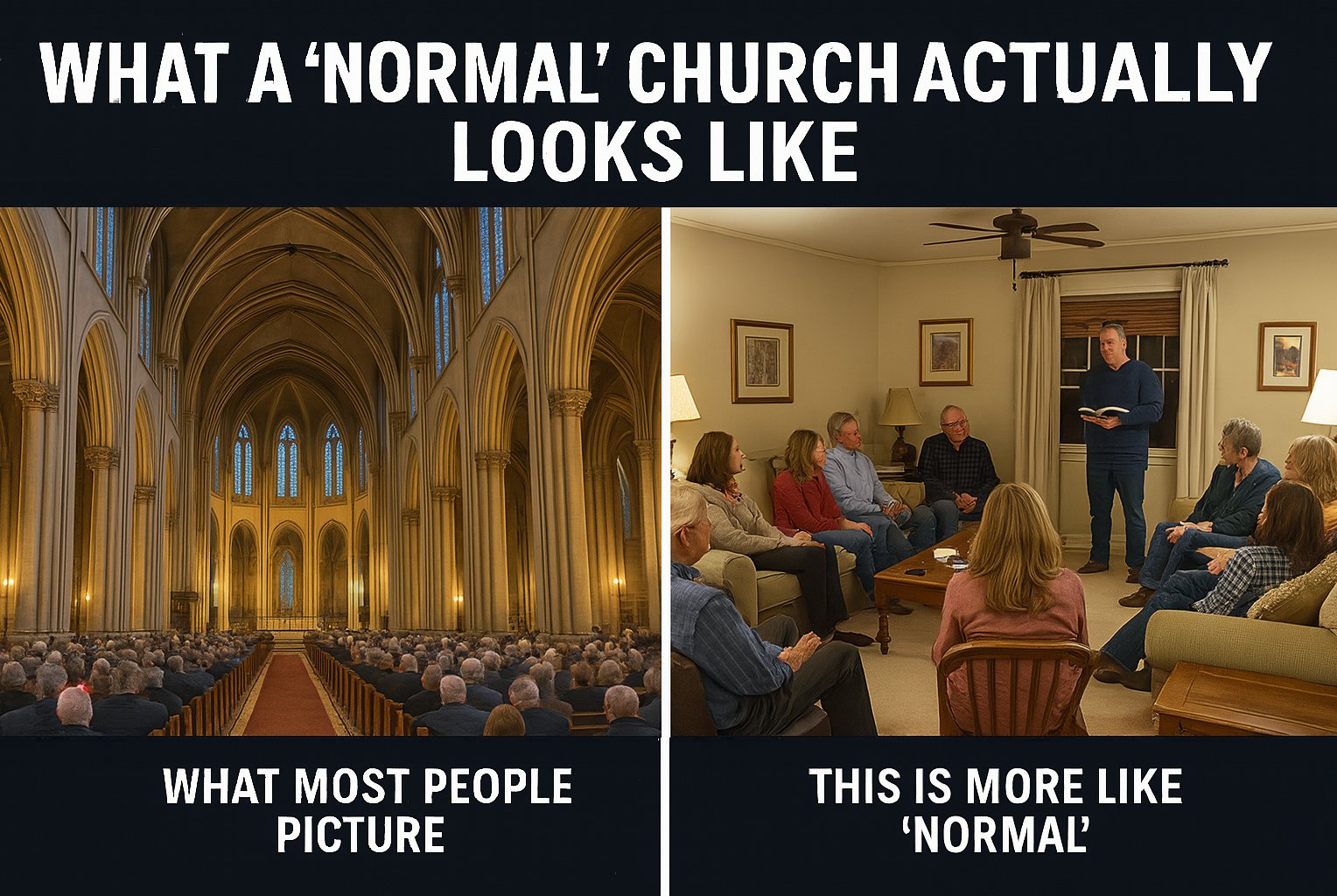
When most people picture a “normal” church, they envision a large building with rows of pews packed with hundreds or even thousands of attendees. But that perception is far from reality. The average American church is not a mega campus but a small, intimate gathering of believers. That cozy congregation you occasionally see in person or in local neighborhoods? It’s actually larger than most churches in the United States.
If you’re a pastor leading a church of around 100 people and feel like you’re falling behind, it’s time to recognize the myth you’ve been sold. Mega churches, though highly visible on social media and streaming platforms, represent less than 1% of U.S. churches. The truth about American churches is radically different—and much more encouraging.
The Real Numbers Behind Church Attendance
According to data from Faith Communities Today and the National Congregation Study, the average church size in the U.S. is just 65 people. These smaller churches form the backbone of spiritual life in America. They are where the majority of discipleship happens, where the deepest relationships are built, and where prayer and community support thrive.
In these settings, people know each other’s names, care for one another, and walk through life’s challenges together. It’s time to stop believing the lie that small is insignificant. If you’re pastoring a church in this size range, you’re not failing—you’re flourishing in the sweet spot of real, relational ministry.
Three Realistic Church Size Tiers
- Foundation Tier (1–65 people)
This is where deep, authentic community lives. Everyone knows everyone. When someone is sick, they’re prayed for. When someone loses a job, the community gathers to support them. The church is deeply embedded in the neighborhood, with low overhead and faster decision-making.
Discipleship thrives here because relationships run deep. These churches focus on what their community truly needs, not on trying to be everything to everyone.
- Bridge Tier (65–150 people)
This group stands at a crucial transition point. Research suggests that 150 is the upper limit for maintaining personal relationships. Bridge-tier churches often have two to three staff members, small group systems, a functioning children’s ministry, and a few specialized outreach efforts.
They combine the intimacy of smaller churches with the budding capacity for broader impact and growth through systems and leadership development.
- Expansion Tier (150+ people)
Here, the structure fundamentally changes. Expansion-tier churches need multiple full-time staff, structured leadership pipelines, and coordinated communication strategies. Every system—from small groups to Sunday services—must be aligned to mission and vision. But size doesn’t necessarily mean superiority.
The Truth About Megachurches
Defined as having over 2,000 attendees, megachurches comprise less than half of 1% of U.S. churches. Yet their media presence is overwhelming. This has led to what many call the “megachurch myth”—the belief that bigger automatically means better.
But research shows per-person discipleship rates are similar across all church sizes. So rather than striving to become a megachurch, the focus should be on becoming a healthy church at whatever size God has placed you.
How to Maximize Impact at Every Size
Foundation Tier Strategies:
- Empower everyone to be the welcoming team.
- Use homes for small groups and ministry.
- Host “everybody knows everybody” events.
- Create opportunities for multi-generational connection.
Bridge Tier Strategies:
- Clarify next steps and ministry paths for attendees.
- Develop leaders and delegate responsibilities.
- Create scalable systems that can grow.
- Focus on two or three signature ministries and do them with excellence.
Expansion Tier Strategies:
- Build a leadership development pipeline.
- Design crystal-clear communication systems.
- Ensure all ministries align with the church’s mission.
Three Universal Truths for Every Church
- Clarity beats capacity. Know who you are, who you’re called to reach, and your God-given assignment.
- Health beats growth. Growing fast without deep discipleship leads to shallow impact.
- Faithfulness beats size. Focus on what matters most—spiritual depth, discipleship, and living out your mission.
The early church in Acts 2 didn’t chase numbers. They prioritized health—and God took care of the growth.
Five Things We Learned
- Most U.S. churches average just 65 attendees, showing that small doesn’t mean unsuccessful.
- Mega churches represent less than 1% of all churches, yet dominate online platforms and shape public perceptions.
- Three main church size tiers—Foundation, Bridge, and Expansion—each have unique strengths and challenges.
- Healthy discipleship and community thrive in small and mid-size churches, often more effectively than in large-scale settings.
- Faithfulness, clarity, and health are more valuable metrics than size in measuring church success.
Begin Your Journey Today
Jesus didn’t just call us to believe in Him—He called us to follow Him.
Step into the life He designed for you through
Emmaus Road’s The Commands of Jesus
.
This is more than learning—it’s an invitation to walk with Him, obey Him, and experience Him in a real and powerful way.
You don’t want to miss this exciting adventure Jesus has called you into.
Start now:
https://GregLancaster.org/StartHere